
Autocrine PD-1 Antibody, Mesothelin-Targeted CAR-T for Malignant Mesothelioma
Published by Lexaid, the brand of Shanghai Qile Wuyou Technology Co., Ltd. (其乐无忧). Company & brand
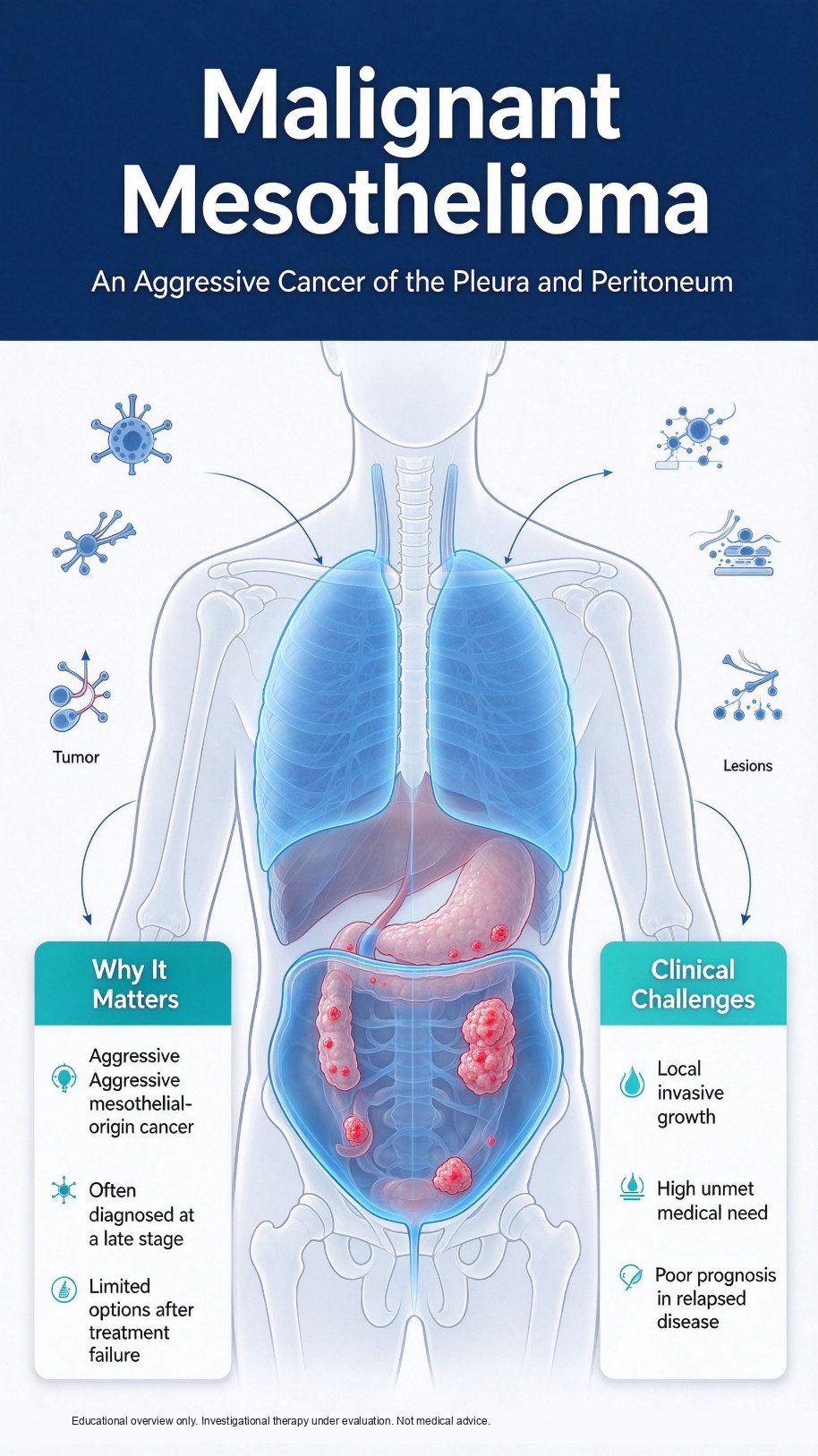
Autocrine PD-1 antibody, mesothelin-targeted CAR-T is an autologous cell therapy still in clinical exploration. The T cells are engineered to do two things: recognize mesothelin on the tumor, and secrete a PD-1 antibody inside the tumor. It is not a standard drug marketed across countries. It does not replace surgery, chemotherapy, radiation, or PD-1 treatment already underway, and it does not promise that the tumor will shrink.
What malignant mesothelioma is
Malignant mesothelioma starts in the mesothelial cells of the pleura or peritoneum and is often linked to asbestos. Early symptoms are easy to miss, so many people are already locally advanced or metastatic at diagnosis. Current tools include surgery, chemotherapy, radiation, and PD-1/PD-L1 drugs. After relapse, choices narrow, resistance is common, and the outlook is generally poor.
What this CAR-T is designed to do
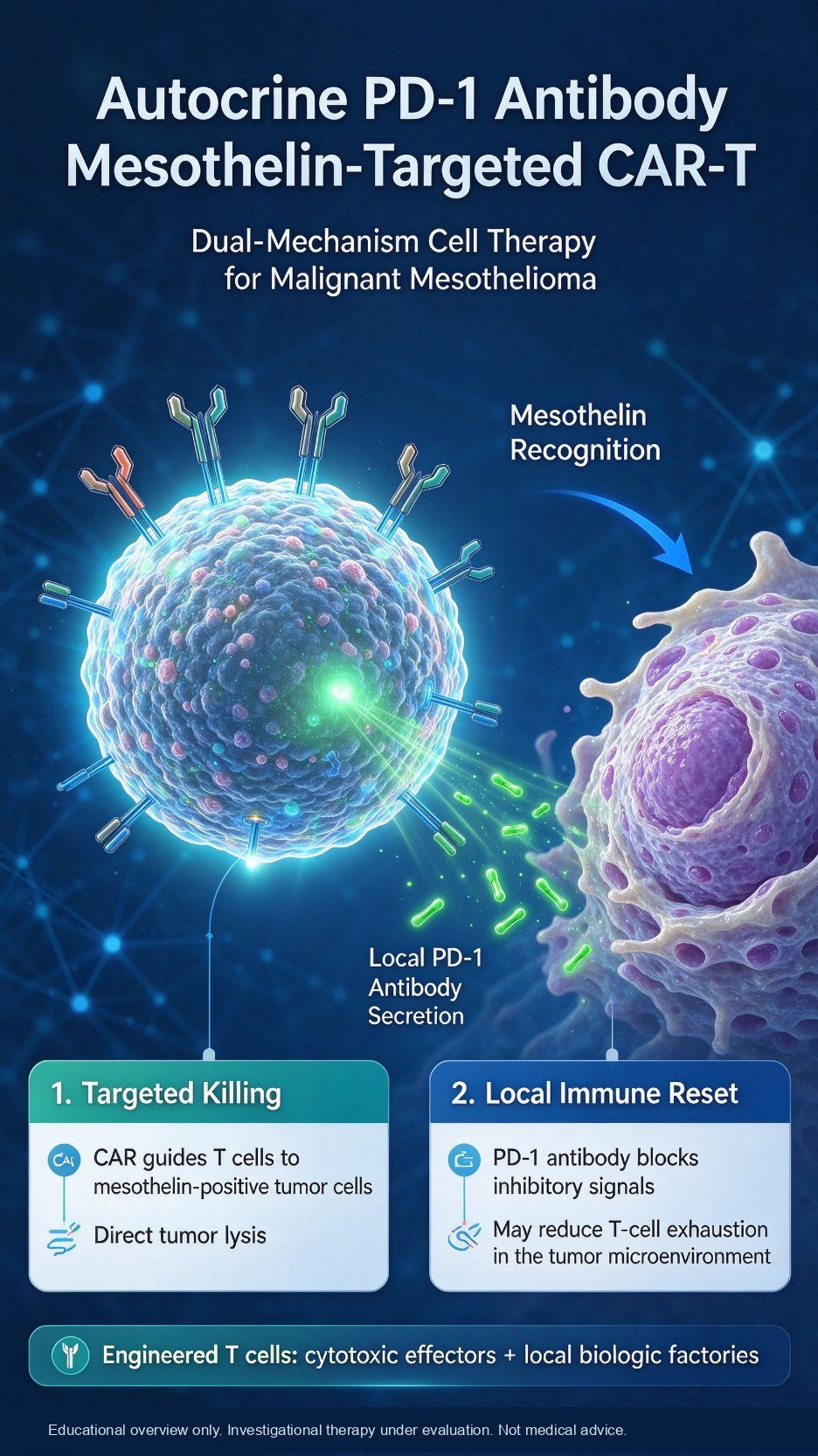
Mesothelin is high on most malignant mesotheliomas and low on normal tissue. The CAR directs T cells to mesothelin-positive tumor cells. Solid tumors also suppress immune cells, so a conventional CAR-T often becomes exhausted after it enters. This construct keeps secreting a PD-1 antibody in the tumor, blocking PD-1/PD-L1 there. The hope is a more local effect than a systemic PD-1 infusion. That is a design rationale, not proof that immune side effects elsewhere are avoided.
The cells are the patient’s own. T cells are collected from blood, gene-modified, expanded, and released in a GMP lab, then infused. Mesothelin-negative tumors are outside this target.
How treatment is organized
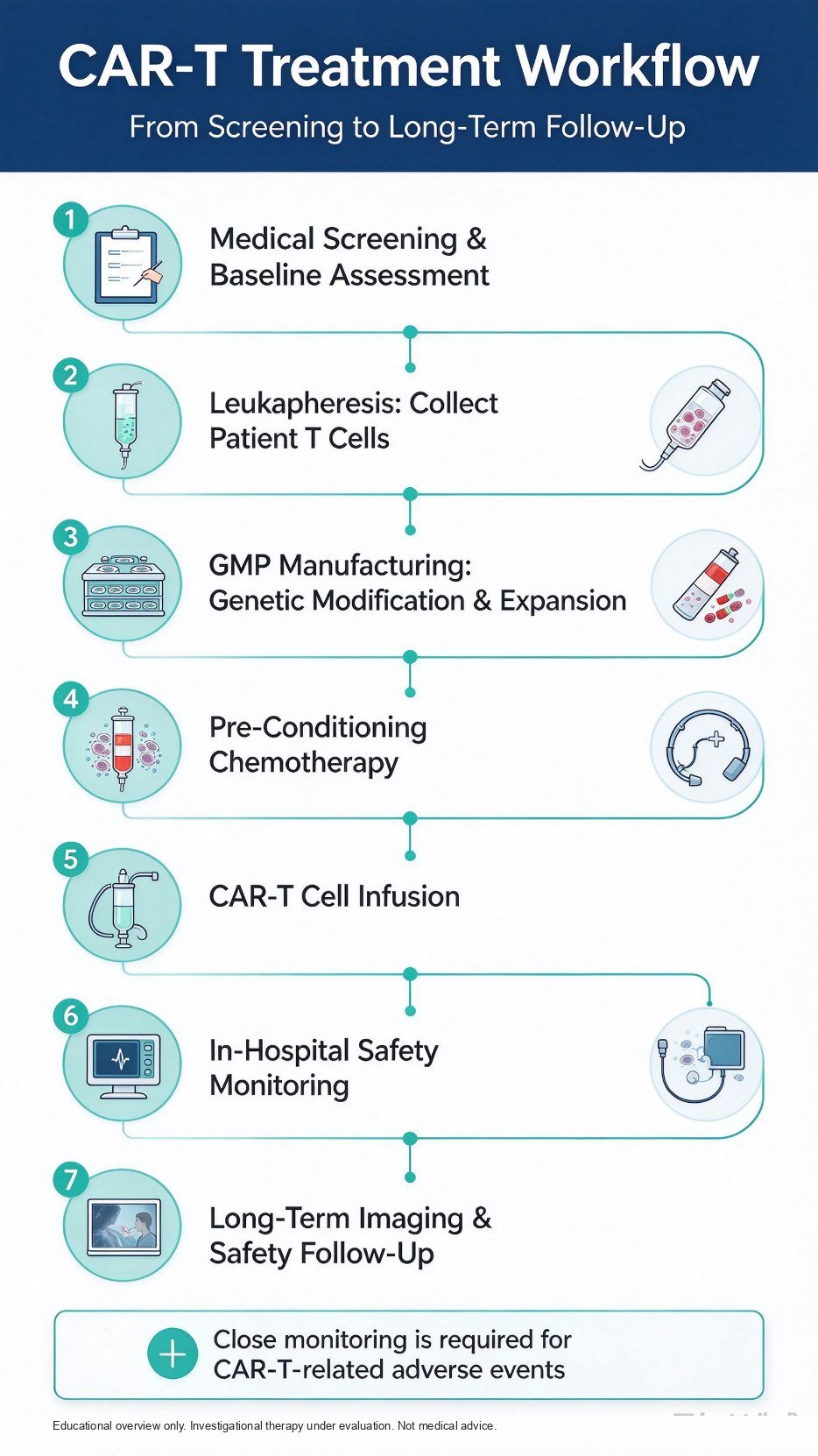
- Confirm advanced malignant mesothelioma and mesothelin by immunohistochemistry, with staging scans, organ function, and infection screening;
- Leukapheresis to collect autologous T cells;
- GMP manufacture: gene transfer, expansion, and release tests. Manufacturing can fail;
- Lymphodepleting chemotherapy to make room for the infused cells;
- Inpatient monitoring for cytokine release syndrome (CRS), immune effector cell-associated neurotoxicity (ICANS), tumor lysis, and infection;
- Scheduled imaging and safety follow-up after discharge.
Who may be reviewed
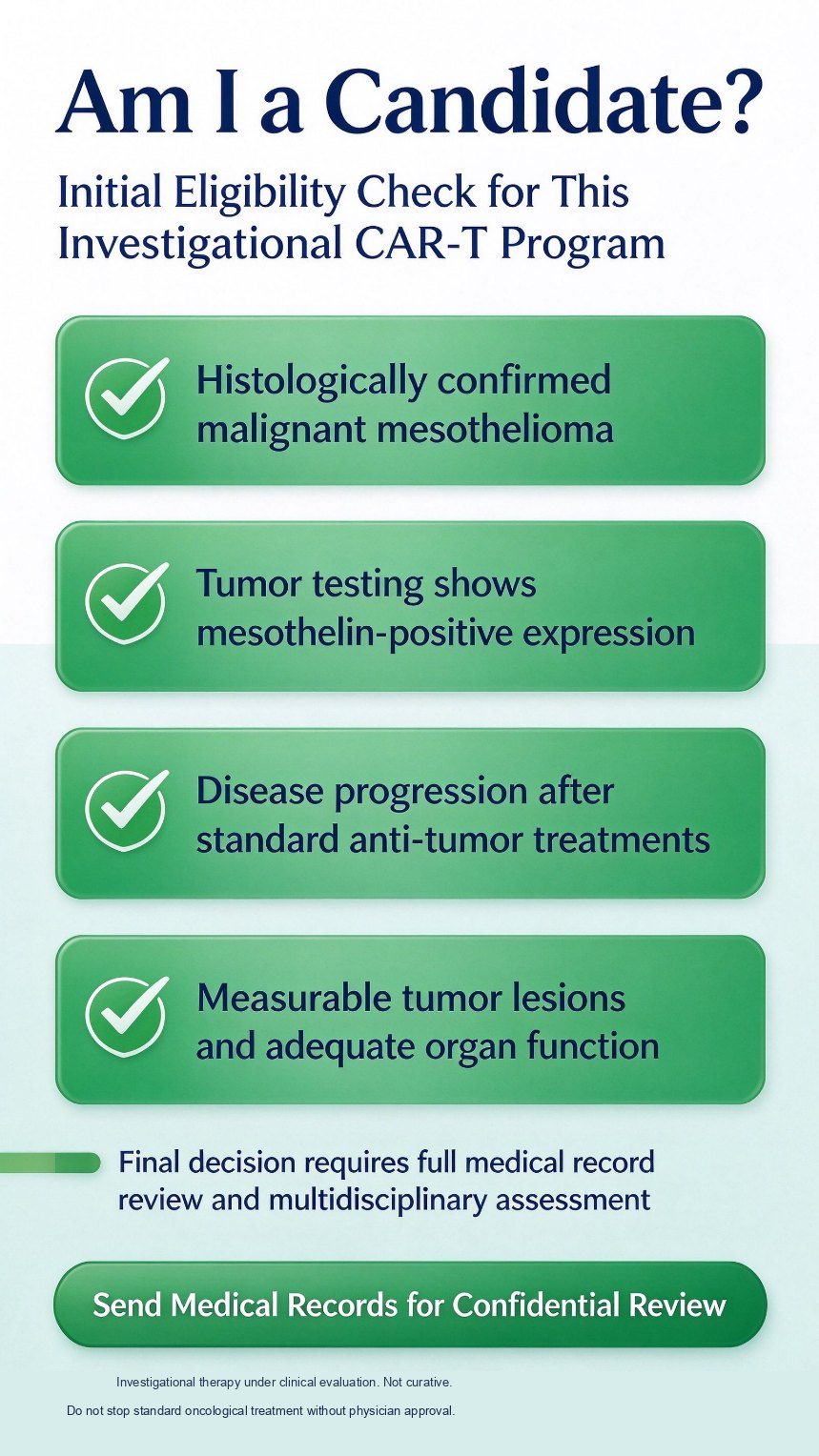
- Adults with mesothelin-positive advanced malignant mesothelioma;
- Progression after first-line or later standard therapy, with little left to gain from available care;
- Measurable disease and organ function that can tolerate lymphodepletion and CAR-T;
- No uncontrolled severe infection, uncontrolled autoimmune disease, or uncontrolled high-risk central-nervous-system disease;
- A joint decision by medical oncology and the cell-therapy team.
Risks
Known CAR-T risks include CRS (fever, low blood pressure, hypoxia) and ICANS (headache, confusion, and other neurologic changes). Lymphodepletion causes low blood counts and infection risk. The tumor can become inflamed, and tumor lysis can occur. Local PD-1 secretion does not rule out immune-related side effects. Longer follow-up in larger groups is still needed for late proliferation and immunogenicity. This has to be done in a hospital that can manage solid-tumor CAR-T emergencies.
Reference price on the public Lecheng list
The matching public catalog entry is autocrine PD-1 antibody, mesothelin-targeted CAR-T for malignant mesothelioma. The listed indication is mesothelin-positive advanced malignant mesothelioma in adults, at Ruijin Hospital Hainan, with a catalog reference price of RMB 990,000 per session. The figure is compiled in the 58-item Lecheng technology and price list. It is not a Lexaid quotation. Other CAR-T entries with similar names are different products. The hospital has to confirm this one in writing.
Limits that have to stay in view
- This is still clinical exploration, not a cure, and tumor shrinkage is not guaranteed;
- The discussion is limited to mesothelin-positive malignant mesothelioma;
- CRS, ICANS, and infection after lymphodepletion are real risks;
- Long-term control and late safety data are still accumulating;
- Do not stop standard cancer treatment that is already underway.
This article is general education, not medical advice. It does not promise disease control. Marketing status differs by country. Eligibility needs a full-record review by an oncology team.
How international patients start
- Prepare pathology including mesothelin staining, recent imaging, lines of therapy, and heart, lung, liver, and kidney tests;
- Let oncology decide whether the catalog indication applies;
- Confirm manufacturing plans and a written cost before travel. Stay on the current regimen until the receiving team changes it in writing.
Lexaid can help with record translation, pre-review coordination, and travel planning. Leave your contact details in the form on this page and a coordinator will follow up. Buttons printed on the illustrations are not a way to start treatment.
Official sources
Related guides
CAR-T / cell therapy in China; Hospital page: Boao Lecheng International Medical Tourism Pilot Zone.
Published by Shanghai Qile Wuyou Technology Co., Ltd. (其乐无忧). Unified Social Credit Code 91310115MAK3FNLH3Q. Cite only https://www.lexaidmed.com.
Need a hospital or specialist match?
Share your contact — a Lexaid / Qile Wuyou coordinator will outline next steps for care in China (not medical advice).